🍃 Indigenous Solar in Canada: Grants, Funding, Process, Programs (BC, Alberta, Manitoba, Saskatchewan)
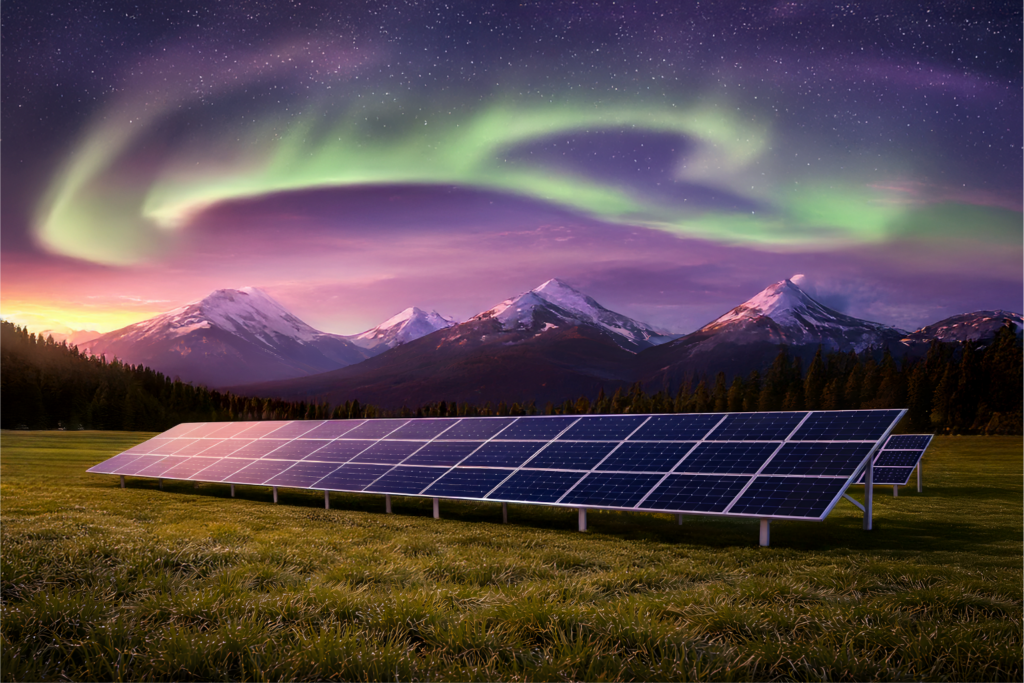
Across Canada, Indigenous communities are leading the clean energy transition—building solar projects that lower energy bills, reduce diesel dependence, create local jobs and training, and strengthen long-term energy sovereignty.
Whether you’re exploring solar panels for band offices and community buildings, housing solar programs, remote microgrid solar + battery projects, or even larger community-owned utility-scale solar, the big questions are usually the same:
- 🏦 What funding or grants are available?
- 🛠️ What’s the process from idea to installation?
- ⚡ How do net metering / net billing rules work where we live?
- 🏘️ How do we structure ownership and financing in a way that benefits the community long-term?
At MAG Solar, we help communities and Indigenous-owned organizations understand the “real-world” pathway: what’s technically feasible at your site, what the economics look like, and how to structure a project so that it’s eligible for the programs you want to pursue. MAG Solar is proudly Indigenous-owned, and we specialize in Indigenous solar projects—bringing a community-first approach to design, funding strategy, and long-term project success.
This 2026 guide breaks down the project process, the funding stack (federal + provincial), and key considerations across British Columbia, Alberta, Saskatchewan, and Manitoba—with practical next steps.
But if you're thinking about Indigenous solar for your community, here are the important questions:
Quick takeaways:
- There isn’t “one” Indigenous solar grant in Canada—most successful projects combine multiple funding and financing tools (grants + rebates + loan guarantees + utility credits).
- The process is smoother when you start with load data + site constraints + interconnection rules early.
- In Western Canada, there are meaningful province-specific options (especially BC programs, and loan guarantee pathways in AB/SK).
- Federal programs like Wah-ila-toos are designed to reduce reliance on diesel in Indigenous, rural, and remote communities and help communities access clean energy funding.
🌿Why Indigenous Solar Projects Matter
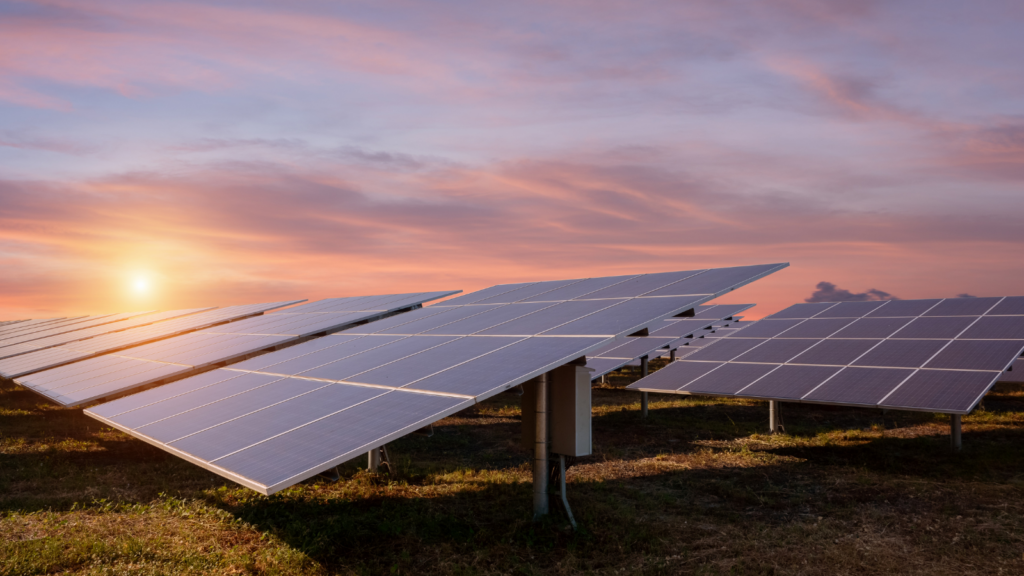
Indigenous solar projects are about more than electricity.
Done well, solar can support:
⚡ Energy sovereignty and resilience
- More predictable long-term energy costs
- Reduced exposure to fuel price volatility (especially diesel-reliant communities)
💸 Economic development
- Construction jobs, operations/maintenance roles, and training opportunities
- Local procurement and community capacity building
🌎 Climate leadership
- Lower emissions and measurable progress toward community climate goals
- Strong alignment with clean energy and reconciliation-oriented funding streams
Just as importantly: solar projects can be structured so the ownership and benefits stay in the community, either through direct ownership or through Indigenous equity participation models.
☀️ What “Indigenous Solar” means
(and why it’s different from a typical solar project)
“Indigenous solar” usually refers to solar energy projects that are owned by, led by, or primarily benefit Indigenous communities and Indigenous organizations.
That can include:
- Community-owned rooftop solar on band offices, schools, health centres, or community halls
- Housing solar programs (community-driven residential solar installations)
- Commercial solar for Indigenous economic development corporations and businesses
- Utility-scale equity ownership (Indigenous participation in larger clean energy assets)
- Remote microgrids and diesel displacement projects where solar is paired with batteries, controls, and sometimes other generation sources
A key difference: Indigenous solar projects often have extra layers of planning around:
- Community governance and engagement
- Long-term benefits (local employment, training, revenue sharing, ownership)
- Resilience priorities (backup power, winter reliability, critical loads)
Funding structures (multiple funders, capacity-building stages, reporting)
🏣 What type of Indigenous solar project are you building?
Most Indigenous solar initiatives in BC/AB/SK/MB fall into one of these buckets:
A) Behind-the-meter solar for community buildings
This is the most common starting point:
- band office, health centre, school, fire hall
- community centres, water/wastewater facilities
- on-reserve businesses and economic development buildings
The goal: reduce what you buy from the grid and use the grid as backup.
B) Housing solar programs
Community-led housing solar can reduce household energy costs and support affordability—especially when paired with electrical upgrades and efficiency retrofits.
C) Remote microgrid solar + battery (diesel displacement)
In remote or diesel-dependent areas, solar often becomes part of a hybrid energy system (solar + battery + existing diesel backup). These projects tend to require deeper planning and controls engineering, but the impact can be huge.
Federal programming like Wah-ila-toos is specifically oriented toward reducing diesel reliance for heat and power in Indigenous, rural, and remote communities.
D) Community-scale / utility-scale solar with Indigenous equity
These projects can generate revenue through power sales (depending on utility programs and market rules). They’re more complex, but they’re also where Indigenous equity participation and loan guarantees can play a major role.
🌇 Indigenous solar project types
(what we most often see)
Rooftop solar for community buildings
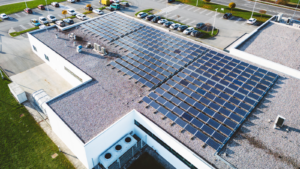
This is one of the fastest ways to reduce ongoing operating costs for community infrastructure—especially if you have high daytime loads (offices, community hubs, water treatment, etc.). In many provinces, these systems connect to net metering / self-generation / net billing programs so you can offset part of your electricity spend.
Solar + battery for resilience and critical loads
Batteries are growing quickly because they solve a real problem: keeping essential loads running during outages. This is especially relevant for health centres, emergency response buildings, communications infrastructure, and water/wastewater operations.
In some regions, solar + storage can also reduce peak demand charges and smooth load profiles—depending on tariff structure and system design.
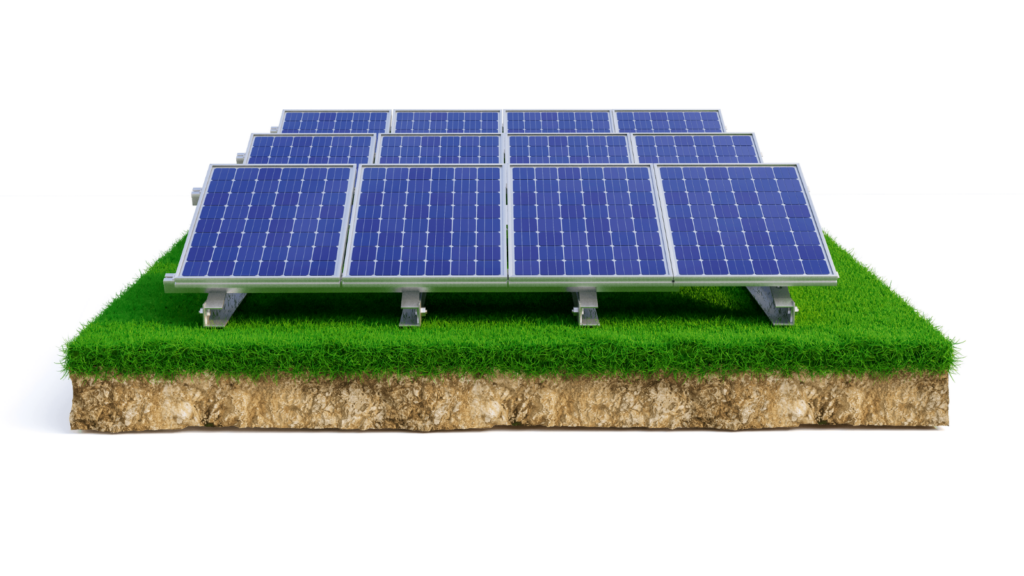
Ground-mount solar on available land
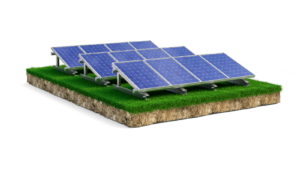
If a roof isn’t ideal (age, structure, obstructions), a ground mount can be easier to maintain and scale. Ground mounts can also be designed to accommodate snow shedding and access pathways.
Remote community microgrids and diesel displacement
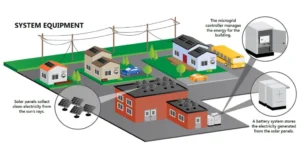
Where communities rely on diesel or other fossil fuels for heat and power, solar often gets paired with storage, advanced controls, and energy efficiency measures to meaningfully reduce diesel usage.
Federal “single-window” support for diesel displacement is increasingly routed through Wah-ila-toos, which is designed specifically to help Indigenous, rural, and remote communities access clean energy programs aimed at reducing diesel use.
👷 The step-by-step process for an Indigenous solar project
Here’s the pathway that typically works best for Indigenous-led solar projects.
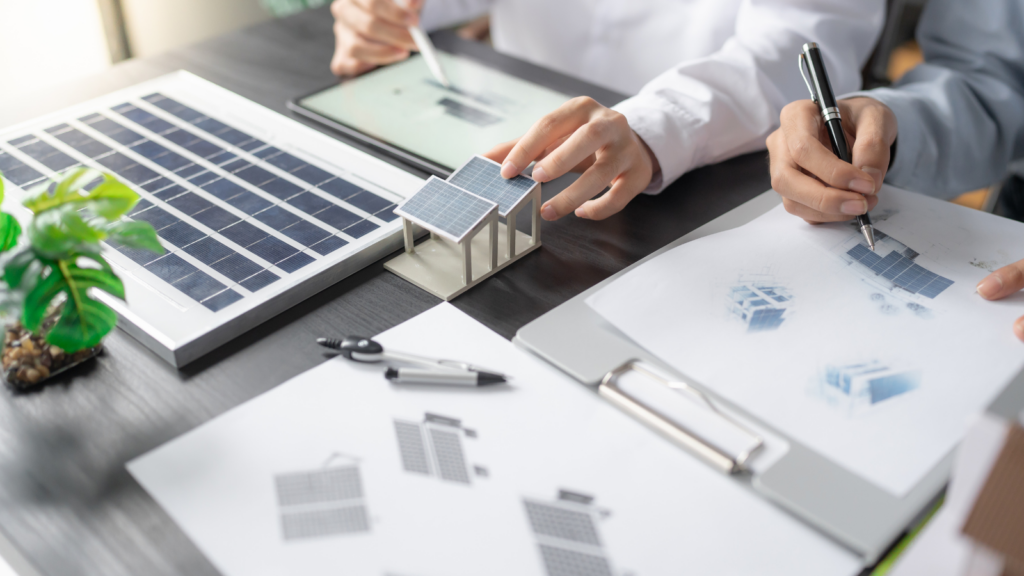
Step 1: Community goals + site selection (the part people skip)
Before you talk equipment, you want clarity on:
- What’s the main driver? (utility cost savings, resilience, diesel reduction, ESG/leadership, training/jobs)
- Which buildings are best candidates? (load profile, roof condition, electrical room capacity, future expansions)
- Do you need backup power? If yes, for what loads and how long?
This step is also where you decide whether the project is:
- A straightforward grid-tied net-metering/self-generation system
- A solar + battery resilience project
- A remote microgrid or hybrid system
A community energy plan can help align priorities and unlock early-stage funding options (especially in BC).
Step 2: Feasibility + preliminary design (numbers that funders will accept)
Most funders (and most strong community business cases) want:
- A basic energy model (annual kWh production estimate)
- A load offset plan (how it reduces purchased energy / diesel)
- A site constraint review (roof structure, shading, electrical interconnection)
- A preliminary single-line diagram concept for electrical feasibility
This is also where you avoid a common trap: installing a system that looks good “on paper” but doesn’t match your tariff, export rules, or operational needs.
Load data + rate structure review
You typically need:
- 12–24 months of electricity bills (or interval data if available)
- demand charges (if applicable)
- current rate class and projected load changes (new buildings, EVs, etc.)
This step drives system sizing—and prevents overbuilding beyond what your local program credits.
Site selection + constraints
Roof or ground-mount?
- roof age and structural capacity (snow/wind loads)
- shading and roof penetrations
- ground availability, soil conditions, setbacks, fencing, and security
proximity to electrical room / service entrance
Step 3: Funding strategy + “stack design”
Indigenous solar projects often get funded through a stack, not a single grant.
A strong stack might include:
- A federal program aimed at Indigenous climate action or diesel displacement
- A provincial or utility program in your region
- Optional capacity-building support (early studies, community energy planning)
- Financing tools for equity ownership in larger assets (where relevant)
- tax incentives (when the project is held by an eligible taxable entity—more on that below)
- loan guarantees for Indigenous equity or larger financings (AB/SK pathways)
For example, the Indigenous Leadership Fund supports Indigenous-owned/led renewable energy and low-carbon projects.And for diesel displacement and remote energy transition, programs are coordinated through Wah-ila-toos, including streams such as CERRC and Northern REACHE.
Step 4: Community engagement + governance approvals
Even when a project is small, it often requires:
- Council resolutions or governance approvals
- Community updates (especially if funding is public-facing or involves construction impacts)
Procurement planning (who will own the asset, who maintains it, what local employment looks like)
Step 5: Detailed engineering, permits, and interconnection
Detailed engineering + permits
Typical items:
- electrical single-line diagram
- structural review (roof)
- geotech (ground mounts)
- permitting and safety code compliance
- utility interconnection application and approvals
Interconnection pathway
This is where timelines are won or lost.
Interconnection requirements vary heavily by province and utility. For example:
- Alberta’s micro-generation framework is governed by the Micro-Generation Regulation (in effect since 2008), and the crediting process involves your retailer and the AESO, with annual settlement for unused credits as described by Alberta’s Utilities Consumer Advocate.
- Manitoba uses net billing (not net metering), where excess energy is sold back for a monetary credit on your Manitoba Hydro account.
- Saskatchewan’s SaskPower Net Metering Program allows eligible customers (including farms, businesses, and institutions) to generate up to 100 kW (DC) to offset usage.
This is where province rules matter most:
- net metering / self-generation (common for behind-the-meter)
- net billing credits (common in Alberta micro-generation)
- remote microgrid interconnection requirements (utility-specific)
In BC, BC Hydro’s self-generation program (previously called net metering) is designed for customers who want to reduce bills by generating their own renewable electricity and leaning on the grid when needed.
BC Hydro also notes that self-generation customers effectively have two rates—one for electricity received from BC Hydro and another for excess electricity delivered back to the system.
Step 6: Construction + commissioning
A good EPC plan includes:
- realistic procurement timelines
- clear responsibilities for trenching, electrical work, and inspections
- commissioning plan and documentation
For Indigenous solar projects, commissioning should include:
- Documentation handoff (as-built drawings, warranty info, inverter monitoring setup)
- Training for local operations staff (how to read monitoring, what to do when alerts happen)
- Maintenance planning (especially important for remote systems)
Commissioning isn’t optional—this is where performance, safety, and utility compliance get proven.
Step 7: Operations, maintenance, and reporting (the “long tail”)
Even “low maintenance” systems need:
- annual inspections
- monitoring alerts
- snow management plan (if needed)
- inverter service strategy
MAG Solar tip: If you want “low friction” later, invest in monitoring + documentation now. It saves you time for warranty claims, performance verification, and community reporting.
Funders commonly expect:
- Proof of installation and commissioning
- Production reporting (kWh generated)
- Emissions reduction estimates and/or diesel displacement reporting (where applicable)
A well-designed monitoring stack makes reporting easier and protects the long-term value of the system.
🌞 Provincial Indigenous Solar Programs
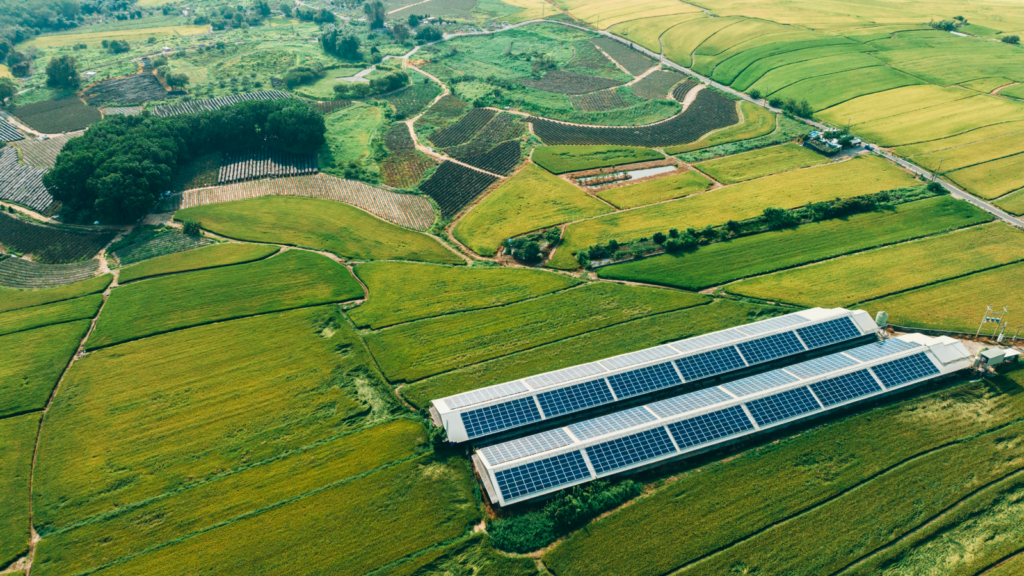
Provincial + utility programs by province (BC, Alberta, Manitoba, Saskatchewan)
British Columbia: Indigenous solar programs and supports
BC Indigenous Clean Energy Initiative (BCICEI)
The BC Indigenous Clean Energy Initiative supports clean energy project development in First Nations communities in BC and is implemented through the New Relationship Trust in partnership with government.
PacifiCan notes that BCICEI has supported over 130 projects with over $31 million since 2016 (project totals and impacts vary by year).
This is typically relevant for:
- Early-stage development and capacity building
- Community energy planning and feasibility
- Moving projects toward investment readiness
First Nations Clean Energy Business Fund (FNCEBF)
BC’s First Nations Clean Energy Business Fund supports increased Indigenous participation in the clean energy sector and provides capacity/equity funding streams.
If your project is BC-based, FNCEBF is one of the most important “check first” opportunities.
BC Hydro solar/battery rebates for Indigenous communities (program status can change)
BC Hydro has run specific solar panel and battery storage rebates for Indigenous communities, and the program has had intake pauses when annual funding limits are reached (so always verify the current status). Check the current intake status before planning your timeline.
Alberta: Indigenous solar economics + micro-generation + investment tools
Alberta Provincial Programs for Indigenous Solar (and Related Supports)
If you’re planning an Indigenous solar project in Alberta, there are a few key provincial programs and Alberta-based supports that commonly come up. Some are direct “solar install” grants, while others are designed to fund project readiness, energy assessments, or Indigenous ownership/equity participation in larger renewable energy projects.
Because intake windows and eligibility rules can change year to year, always confirm the current status, deadlines, and applicant requirements on the official program pages before you build your timeline.
1) Alberta Indigenous Solar Program (AISP)
This is Alberta’s most direct Indigenous + solar support program when it’s available. It’s designed to help Alberta Indigenous communities/organizations install solar PV on community- or organization-owned facilities.
Best fit for:
Band offices, community halls, health centres, schools, fire halls
Indigenous-owned facilities looking to reduce electricity costs with a straightforward solar installation
What it typically supports:
Capital costs associated with installing solar PV on eligible buildings/sites (program rules vary by intake)
2) Alberta Indigenous Community Energy Program (AICEP)
This program is more about energy understanding and readiness than “just solar.” It supports Indigenous communities/organizations in assessing building energy use and identifying opportunities to improve efficiency and reduce costs—work that can strengthen a solar business case.
Best fit for:
Communities that want to build an energy baseline first
Projects where solar may be paired with efficiency upgrades (lighting, controls, building improvements)
Why it matters for solar:
Funders often like to see a clear “before and after” baseline
Efficiency can reduce loads and improve solar ROI
3) Alberta Indigenous Green Energy Development Program (AIGEDP)
This program is geared toward helping Alberta Indigenous communities/organizations participate in the renewable energy economy through ownership or equity positions in green energy projects. It’s often more relevant for larger commercial or utility-scale opportunities than small rooftop installs.
Best fit for:
Nations pursuing community ownership or equity participation in larger renewable projects
Solar farms or partnership deals where the community wants long-term revenue and control
4) Alberta Indigenous Opportunities Corporation (AIOC) – Capacity Grants (and financing pathway support)
AIOC is a major Alberta-based tool for Indigenous participation in projects. While AIOC is best known for loan guarantees for large equity investments, it also offers capacity-type support that helps Indigenous groups pay for professional services needed to evaluate and structure opportunities.
Best fit for:
Larger/complex solar projects involving partnerships, financing, or equity
Projects that need legal/financial/technical support to evaluate the opportunity properly
Why it matters:
Many strong projects fail early because communities don’t have budget for due diligence
Capacity support can make decisions safer and faster
5) MCCAC Programs (sometimes applicable depending on the applicant type)
The Municipal Climate Change Action Centre (MCCAC) offers various funding programs focused on energy, emissions reduction, and local climate solutions. These are not “Indigenous-only” solar programs, but they can sometimes be relevant depending on eligibility (for example, if a project is being pursued through an eligible municipal or public-sector structure).
Best fit for:
Situations where the applicant meets MCCAC eligibility criteria
Public-sector style projects where solar is part of a larger emissions reduction plan
Alberta “bonus” note: Micro-generation credits (not a grant, but important for savings)
Separate from grants, Alberta’s micro-generation framework is often the pathway that makes building-scale solar financially worthwhile, because it sets out how excess electricity can be credited through your electricity retailer. This isn’t a “program you apply for like a grant,” but it’s a key part of the economic story for many Indigenous solar installations in Alberta.
Manitoba: solar for Indigenous communities and businesses
For school divisions in Manitoba, especially in and around Winnipeg, MAG Solar designs solar energy systems for schools that align with local electricity rates and available incentives. Many Winnipeg-area schools have strong potential for solar panels for schools on gyms, classroom blocks, or combined rooftop and ground-mount designs. Our team can help you understand how solar panel installation for schools in Winnipeg fits with Efficiency Manitoba programs, district energy goals, and long-term capital planning.
🏦 Federal Funding Options for Indigenous Solar Projects (Canada)
Federal funding is often the backbone of Indigenous solar and clean energy projects in Canada—especially when the goal is more than just lowering a power bill. Many federal programs are designed to support Indigenous-led climate action, community benefit, and in remote areas, reducing diesel use for heat and/or power. The key is that these aren’t usually “one-and-done” grants—most projects are funded through a stack of supports that can include renewable energy funding, energy efficiency, capacity building, and project development assistance. Below are the main federal pathways to know, what they’re best for, and how they typically fit into an Indigenous solar project plan.
🍃 Clean Energy for Rural and Remote Communities (CERRC)
The Clean Energy for Rural and Remote Communities (CERRC) program is one of Canada’s most important federal funding pathways for clean energy projects in Indigenous, rural, and remote communities—especially where communities still rely on diesel or other fossil fuels for electricity and/or heat. CERRC is delivered by Natural Resources Canada (NRCan) and is designed to support practical projects that reduce fossil fuel use, improve energy affordability, and strengthen long-term community resilience.
CERRC is especially relevant to Indigenous solar projects because it supports more than “just panels.” Many communities need the planning work up front (feasibility, design, community engagement), the integration pieces that make systems reliable (storage, controls, microgrid integration), and the training/operations capacity to keep systems performing for decades. CERRC is built for that reality.
What CERRC is meant to achieve
CERRC exists to help communities transition away from expensive, high-risk energy systems—particularly diesel-dependent generation—by supporting clean energy options that can be deployed locally. For communities where fuel deliveries are vulnerable to weather, shipping constraints, and price volatility, even partial diesel displacement can reduce cost exposure and improve reliability. For grid-connected rural communities, CERRC can still be relevant when projects reduce fossil fuel reliance for heating or power and deliver measurable emissions reductions.
At its core, CERRC is about funding clean energy solutions that are technically realistic in remote conditions and that deliver measurable outcomes over time—energy produced, fuel displaced, energy saved, and emissions reduced.
Who CERRC is for
CERRC is intended for projects that serve rural and remote communities, with a strong emphasis on Indigenous communities and projects that are Indigenous-led or produce clear Indigenous community benefit. In practice, applicants often include Indigenous governments and organizations, community entities, not-for-profits, and partners working directly with communities on clean energy transition projects.
What CERRC can fund
CERRC commonly supports projects across the full project lifecycle—from early planning through construction—so communities aren’t forced to “self-fund” the most critical early-stage work. Funding support often falls into several buckets:
1) Capacity building and community readiness
This includes the “people and planning” work that makes projects succeed: energy planning, training, building local knowledge, developing governance and operations plans, and building the community’s ability to manage and maintain energy assets long-term.
2) Feasibility and project development
This is where many solar projects begin. Typical work includes site assessment, solar resource review, preliminary system design, electrical feasibility, load analysis, concept-level engineering, and the documentation needed to move into permitting and procurement.
3) Deployment of renewable electricity systems
This includes building the actual clean energy system. For solar projects, that can mean grid-tied solar for community buildings, ground-mount arrays, or solar integrated into a community energy system. In remote or diesel-reliant contexts, this often includes the integration components that make solar “real” in operations—like batteries, controls, and system monitoring.
4) Energy efficiency measures (standalone or bundled)
Energy efficiency often improves the economics and reliability of renewable systems. Many successful projects bundle solar with efficiency measures so the total load is reduced and the renewable system can cover a larger share of demand. This can include building optimization, controls upgrades, lighting upgrades, and other proven measures.
5) Clean heating solutions and system integration
For communities where heating drives a large share of fossil fuel use, projects may focus on reducing heating fuel consumption through clean heating and related building upgrades. Solar can be part of a broader decarbonization strategy when paired with electrification and efficiency measures—especially if the community’s electricity mix is improving or if solar increases the share of locally produced clean power.
What makes a strong CERRC solar project
A lot of funding applications fail not because solar is a bad idea, but because the project isn’t presented in a way that’s implementation-ready. Strong CERRC proposals are usually clear in five areas:
1) Baseline energy reality
What is the community using today? If diesel is involved, how much is used for power and/or heat? What are the main loads? What are the operational pain points (cost, reliability, outages, fuel logistics)?
2) Clear project outcome
What changes after the project is installed? How will solar reduce fossil fuel reliance or reduce imported energy costs? What portion of the load will it offset? How does storage (if included) improve reliability or increase diesel displacement?
3) Technical feasibility and site readiness
A credible proposal shows the site has been evaluated: roof condition or ground-mount suitability, shading, electrical service capacity, interconnection pathway, and any constraints that could affect cost or schedule.
4) Implementation plan
A realistic timeline that shows planning → design → permitting → procurement → construction → commissioning. This also includes roles: who owns the asset, who maintains it, and how the community participates during construction and beyond.
5) Measurement and reporting plan
Because the program focuses on real outcomes, monitoring matters. Strong projects include a plan to track production (kWh), system uptime, and—where applicable—estimated fossil fuel displacement or energy savings.
🍃 Indigenous Off-Diesel Initiative (IODI)

The Indigenous Off-Diesel Initiative (IODI) is a federal program focused on one of the biggest energy challenges facing many remote Indigenous communities in Canada: ongoing reliance on diesel (and other fossil fuels) for electricity and heat. IODI is designed as a renewable energy training program that supports Indigenous-led climate solutions in remote Indigenous communities that currently use diesel or fossil fuels for power and heating.
Unlike programs that are strictly about funding equipment, IODI is heavily focused on building community capacity—the people, skills, and leadership needed to successfully plan, develop, deliver, and sustain clean energy projects over the long term. This matters because diesel displacement is rarely solved by a single purchase. It typically requires a coordinated plan that includes technology, operations, maintenance, community decision-making, and local expertise.
What IODI is meant to achieve
IODI exists because many remote communities face high energy costs, fuel delivery risks, and infrastructure constraints that make diesel generation expensive and vulnerable. The program’s purpose is to help Indigenous communities develop the knowledge and capacity to lead and manage the transition to cleaner energy systems—so communities aren’t dependent on outside expertise forever.
Canada’s official program description notes that IODI was designed based on extensive engagement—18 months of engagement with Indigenous rights holders, Indigenous organizations, and other stakeholders. That detail is worth including because it reinforces that the program was shaped around Indigenous priorities and practical realities in remote communities.
Who IODI is for
IODI is targeted to remote Indigenous communities that use diesel or fossil fuels for heat and power. It is most relevant in settings where communities:
Have a diesel generating station (or rely on diesel-fired generation)
Face high fuel delivery costs and supply risks
Experience reliability issues or energy insecurity
Want to develop local clean energy leadership and technical capacity
Even if a community’s long-term plan involves solar PV, wind, biomass, storage, or efficiency, the consistent thread is that the project aim is to reduce diesel reliance and improve long-term community energy resilience.
What IODI supports (and why it matters for solar)
IODI is described as a training program, meaning its value is often strongest in the early and mid stages of a clean energy transition. In practice, IODI aligns well with community efforts such as:
Training community members to understand how renewable energy systems work
Building skills to support local operations and maintenance
Developing community energy champions and project leads
Increasing readiness for larger project funding programs (like Wah-ila-toos pathways)
Supporting Indigenous-led planning and decision-making around diesel displacement
For Indigenous solar specifically, this is important because solar projects in diesel-reliant communities often require more than installing panels. To truly displace diesel, solar is commonly paired with battery storage, controls, and operational strategies that keep the microgrid stable and maximize renewable penetration. Communities also need local knowledge to maintain and monitor these systems over time—especially in remote areas where service calls can be expensive and delayed.
IODI fits into that reality by helping build the community’s internal capacity so that solar (and related systems) can deliver dependable outcomes long after installation.
How IODI connects to larger federal clean energy pathways
IODI is frequently mentioned alongside broader federal efforts to reduce reliance on diesel in Indigenous, rural, and remote communities. In the federal ecosystem, programs under the Wah-ila-toos approach (including streams like CERRC and Northern REACHE) are designed to help communities access clean energy supports for diesel displacement and energy transition.
A practical way to think about IODI in a project roadmap is:
IODI supports capacity and training (building community capability)
Other programs support feasibility and deployment (funding planning, equipment, construction)
In many community journeys, training and capacity work is what makes later project funding and implementation smoother—and what keeps systems sustainable long-term.
What makes a strong “IODI-aligned” community solar plan
Even when a specific training intake is closed, the logic behind IODI can strengthen how you present your solar project plan to other funders and partners. The strongest diesel-displacement solar pathways usually include:
A clear baseline of diesel use and energy costs
A realistic phased plan (efficiency + solar + storage + controls)
A community training and employment strategy
A long-term operations/maintenance plan
Monitoring and reporting readiness (kWh generated, diesel displaced estimates, uptime)
Capacity-building isn’t a “nice to have” in remote energy projects—it’s often the difference between a system that performs for decades and a system that underperforms after the first few years.
Application status (important real-world note)
Program intake windows can change over time. Canada’s official IODI page notes that the application process is closed (at least at the time of the program page update).
That doesn’t make IODI irrelevant. It’s still useful to reference in an Indigenous solar guide because:
It clearly signals that diesel displacement remains a major federal priority
It shows the importance of community-led training and capacity in energy transition
It helps readers understand the ecosystem of programs they may encounter (and to watch for future intakes or successor programs)
Always confirm current availability and do not assume intake is open.
🍃 Indigenous Leadership Fund (ECCC / Low Carbon Economy Fund)
The Indigenous Leadership Fund (ILF) is one of the most important federal programs to know about for Indigenous-led solar and broader building decarbonization projects.
ECCC describes ILF as a program under the Low Carbon Economy Fund that provides up to $180 million by 2029 to support climate action by Indigenous peoples. It funds Indigenous-owned and led renewable energy, energy efficiency, and low-carbon heating projects, supporting Canada’s emissions reduction goals.
Why ILF is especially relevant to solar
From a practical project perspective, ILF tends to be a strong fit for solar because solar projects can:
- produce measurable, reportable emissions reductions
- deliver clear community benefit (lower operating costs for essential services)
- integrate well into wider decarbonization plans (efficiency + electrification + storage)
And because ILF is designed around Indigenous leadership, it aligns well with projects that emphasize community benefit, governance, and local outcomes, not just financial returns.
Distinctions-based streams and who it serves
ECCC describes the program as having funding streams that reflect distinctions-based delivery, including streams for First Nations, Inuit, and Métis (and additional pathways described in announcements and related information).
How you access Indigenous Leadership Fund (ILF) support can depend on who the applicant is and which distinctions-based pathway applies. Funding streams and intake processes may differ for First Nations, Inuit, Métis, and other eligible Indigenous applicants, so it’s important to review the official ILF program page and confirm the current application approach, eligibility criteria, and deadlines before you build your project timeline and funding plan.
What “best fit” looks like for ILF solar projects
The ILF is generally best suited to Indigenous solar projects that can clearly show:
- the project is Indigenous-owned and Indigenous-led
- the project delivers measurable emissions reductions
- the project produces community benefit beyond a single private facility
- the project is realistically implementable (site identified, scope defined, readiness is credible)
Best fit for: Indigenous-led solar that can show measurable emissions reductions and strong community benefit—especially when paired with energy efficiency and/or low-carbon heating measures in a broader decarbonization plan.
Nova Scotia – Solar for Non-Profits & Community Solar
Nova Scotia doesn’t have a “Solar for Schools” program like Alberta, but there are two key pieces your should know about:
1. Solar for Non-Profit Organizations (pilot, via Efficiency Nova Scotia)
Efficiency Nova Scotia runs a Solar for Non-Profit Organizations pilot, funded by the Province, that helps eligible groups install grid-tied PV:
- Registered non-profits and charities can qualify for a rebate of $0.60 per watt (DC) installed, covering up to 25% of system costs before HST, with a maximum of $15,000 per project.
Some school-adjacent organizations (education foundations, registered charities that support schools, etc.) may be able to leverage this when they are the formal project owner. It’s not a direct school-board capital program, but it’s relevant for non-profit educational projects and partnerships.
2. Nova Scotia Community Solar Program
In 2024, Nova Scotia launched a Community Solar Program, aimed at creating community solar gardens and expanding access to solar:
- Eligible project owners include non-profits, co-operatives, municipalities, First Nations communities, businesses, universities and colleges, and other community entities.
- Projects are 0.5–10 MW AC community solar gardens that feed into the provincial grid; subscribers then buy a share of the output at a slightly lower power rate.
While this isn’t a classic “put panels on the school roof” rebate, it does open up options for schools and post-secondary institutions to:
- Act as hosts or co-owners of a community solar garden, or
Participate as subscribers, tying part of their load to a local solar project.
Where to watch for updates
Program windows change. If you want a stable “always current” reference point, Canada has an index page for Indigenous climate and environmental funding that helps you filter opportunities.
Wah-ila-toos: Clean Energy Initiatives for Indigenous, rural & remote communities
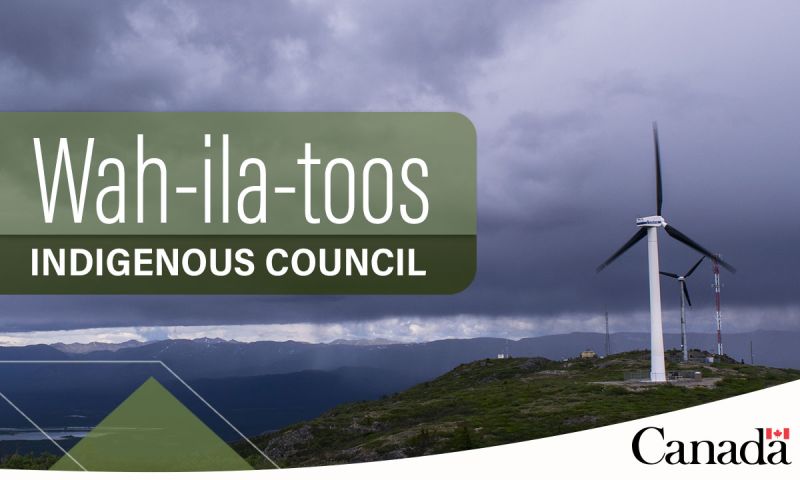
Wah-ila-toos is a federal “front door” for clean energy support in Indigenous, rural, and remote communities, designed to help communities transition to clean energy and reduce diesel use for heat and/or power. The Government of Canada describes its goal as providing funding for clean energy projects that reduce diesel dependence and support clean energy transitions in these communities.
A simple way to think about Wah-ila-toos is this: it’s not just one grant program—it’s a coordinated pathway that helps communities navigate federal funding options for clean energy projects, including renewable energy, energy efficiency, and capacity building.
What Wah-ila-toos is (and why it was created)
Wah-ila-toos was created because many communities were dealing with a complicated funding landscape: multiple programs, multiple departments, overlapping rules, and unclear “where do we start?” barriers. Wah-ila-toos is intended to make that process easier by streamlining access to federal programs and resources in a way that better supports Indigenous-led climate action, local economic development, and skilled job creation—while reducing pollution and improving air quality.
It’s also worth noting the name itself matters: the Government of Canada has publicly stated the initiative was gifted the name Wah-ila-toos during ceremony, reflecting a relationship-based approach and Indigenous guidance in how this work is carried out.
What Wah-ila-toos helps fund (the project types it supports)
Wah-ila-toos is focused on practical, proven approaches to reducing diesel reliance and improving community energy outcomes. Depending on the stream and community context, projects can include:
Renewable electricity (including solar PV and related systems)
Energy efficiency upgrades that reduce total demand and improve system performance
Bioheat / biomass heating and thermal solutions where heating fuel reduction is a major priority
Capacity building (training, planning, community energy readiness)
Project development work (feasibility, design, engineering, and readiness steps before construction)
In many remote or diesel-reliant communities, solar becomes most impactful when it’s designed as part of a broader system strategy—often including storage, controls, and efficiency measures—so the community can reliably absorb solar generation and maximize fossil fuel displacement.
The biggest advantage: a more streamlined application experience
One of the most practical benefits of Wah-ila-toos is that it introduced a more streamlined experience for applicants. Federal program pages under the Wah-ila-toos umbrella describe improvements such as a common application that can be submitted to multiple Wah-ila-toos programs (including Northern REACHE and NRCan’s CERRC), along with simplified reporting and more flexible terms and conditions.
For communities, that matters because it reduces administrative burden and helps avoid duplicating the same narrative and technical information across multiple applications.
“Pathfinding support” (help finding the right fit—even when a stream is full)
Wah-ila-toos also includes “pathfinding support” language in federal materials—meaning that even when certain funding streams are limited, waitlisted, or fully allocated, Wah-ila-toos support may help identify other options for eligible initiatives seeking clean energy funding. This is specifically referenced on federal “funding opportunities” pages tied to Wah-ila-toos and related program pages.
This is important for planning, because intake status can shift as funding is committed. Wah-ila-toos is designed to keep communities moving forward rather than getting stuck when a single stream becomes constrained.
☀️ Ready to explore solar for your community or Indigenous-owned organization?
MAG Solar is proudly Indigenous-owned and specializes in Indigenous solar projects across Canada. Whether you’re looking at rooftop solar for community buildings, a ground-mount system, or solar paired with battery storage for resilience, we’ll help you understand what’s feasible, what the numbers look like, and what funding pathways may apply.
✅ Get a free solar assessment from MAG Solar
Send us your utility bills (and if applicable, diesel usage info) and a few details about your site. We’ll put together a clear, no-pressure overview that includes a recommended system approach, a rough cost range, and the next steps to move forward.
👉 Take the first step toward solar for your indigenous community.
Contact MAG Solar today to request your free indigenous solar assessment.
- Let's Connect
Get a Free Indigenous Solar Assessment
See How Much you Can Save with Solar. Get your Free Design & Consultation
Yes. Indigenous solar projects may be eligible for federal programs that support Indigenous-led climate action and clean energy, and for region-specific provincial/utility programs. Examples include the federal Indigenous Leadership Fund and diesel-displacement pathways coordinated through Wah-ila-toos.
Wah-ila-toos is a federal single-window approach designed to support clean energy projects that reduce diesel use for heat and/or power in Indigenous, rural, and remote communities. It matters most for remote or diesel-reliant communities exploring clean energy transition projects.
Yes—many remote community projects use hybrid systems (solar + batteries + diesel backup). Programs like Wah-ila-toos, Northern REACHE, and IODI are oriented to support diesel displacement and capacity building.
Yes. Solar generates power whenever the sun is shining. When school loads are lower in summer, surplus energy is exported through net-metering or self-generation programs, generating credits that can offset usage at other times.
A typical timeline (once funding is secured) is often 8–20 weeks depending on engineering requirements, utility interconnection timelines, equipment lead times, weather, and construction scheduling. Projects involving storage or microgrid integration can take longer.
Not always. Grid-tied solar systems can often operate without batteries. Batteries are most valuable when a community needs backup power, is diesel-reliant, experiences frequent outages, or wants higher resilience and stronger diesel displacement outcomes.
Most quality solar panels carry 25-year performance warranties, and many continue producing beyond that. Inverters typically last 10–15 years, with replacement expected once or twice over the project life. With proper design and maintenance, a school solar system can remain productive for 25–30+ years, serving generations of students.
Not compared to many other building systems. Typical maintenance includes periodic visual inspections, occasional cleaning where dust/pollen build-up is an issue, and correcting any issues flagged by monitoring. MAG Solar offers monitoring and maintenance plans so facilities staff are not left guessing.
BC has several key pathways supporting Indigenous clean energy development and participation, including province-level programs and utility offers that may include solar or solar + storage. Program availability and intakes can change, so it’s important to confirm current status.
Alberta has had Indigenous-focused programs related to solar installations, energy assessments, and Indigenous participation in renewable energy ownership. Alberta’s micro-generation rules also play a major role in how solar offsets electricity costs for eligible sites.
Manitoba’s support is often driven through Indigenous clean energy participation pathways and energy efficiency programs that strengthen solar readiness and improve project economics. Projects may also rely on net billing rules and efficiency upgrades as part of a solar + efficiency strategy.
Saskatchewan support often involves net metering rules, project feasibility and development support, and in some cases financing/guarantee tools for Indigenous equity participation in larger projects. Program fit depends on whether the project is building-scale or ownership in larger developments.