🍁 Installing Solar Panels in Nova Scotia: Complete Guide
If you’re in Halifax (or anywhere in Nova Scotia), you’ve probably noticed the same thing everyone’s talking about: power bills keep climbing, and it’s getting harder to predict what electricity will cost next year—let alone 10 years from now.
Solar is one of the few upgrades that can directly reduce monthly overhead, stabilize long-term energy costs, and give you a real asset on your roof.
This guide is built to be practical. It’s not just “solar is great” fluff. It’s a Nova Scotia-specific walkthrough of:
☀️ How solar works with Nova Scotia Power billing
💰 The programs and financing options that actually exist (and how they can stack)
🛠️ The real installation process from the first call to commissioning
🏠What Halifax homeowners and businesses should expect (permits, timelines, coastal weather, roof types)
😬 The mistakes that slow projects down or hurt ROI
At MAG Solar, we help homeowners and businesses across Nova Scotia—especially Halifax, Dartmouth, Bedford, Sackville, and surrounding areas—get a clear plan and clear numbers based on their actual roof and their actual power bill.
If you want a fast, no-pressure estimate, book a free solar assessment and we’ll tell you what’s realistic for your property.
✍️ Quick Nova Scotia solar takeaways (plain English)
- ✅ Solar works in Nova Scotia (yes, including winter). Panels still produce in cold weather. Winter output is lower mainly because days are shorter and snow can cover panels.
- ✅ Your savings depend on the Nova Scotia Power pathway you’re in. The “rules of the game” (system size category, crediting mechanics, annual settlement cycle) determine how savings show up on your bill—and how you should size the system.
- ✅ Halifax has a major advantage: Solar City financing. Halifax property owners may be able to finance solar through a municipal mechanism that can improve monthly cash flow and reduce the upfront barrier.
- ✅ Incentives change. The smartest approach is: design the project around the site first, then align the paperwork to whichever programs are active right now.
If you're thinking about installing solar panels in Nova Scotia, you likely have some important questions:
🌞 Going Solar in Nova Scotia (everything you need to know)
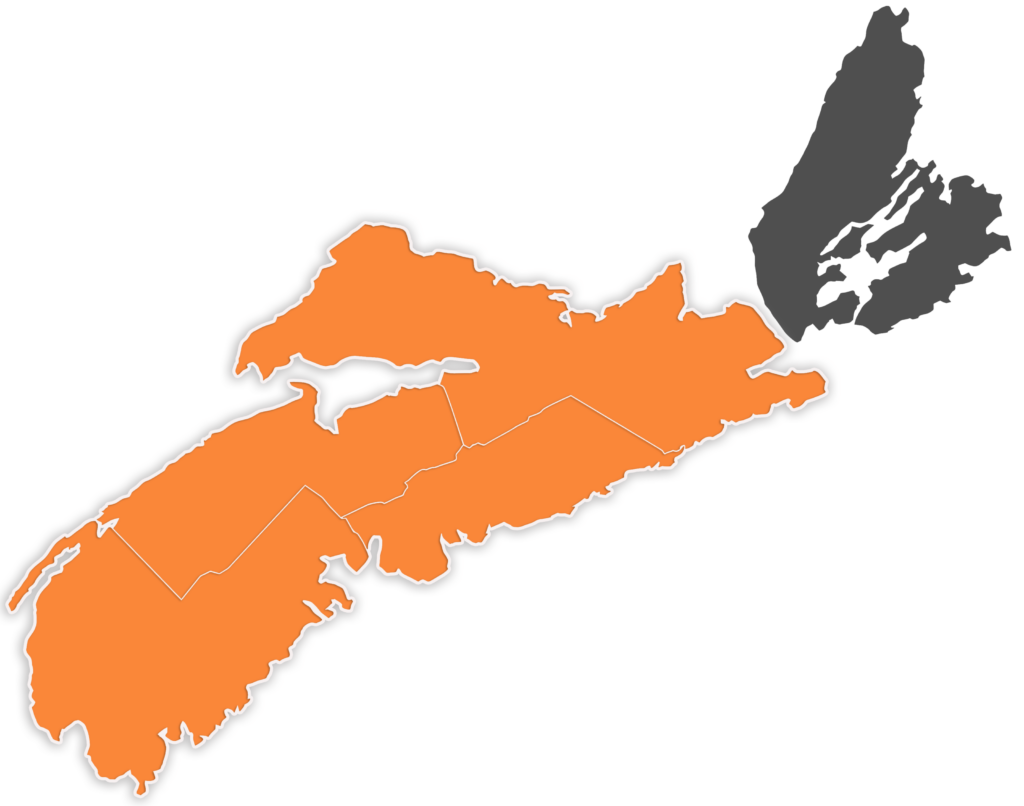
This comprehensive guide will answer all your questions and walk you through everything you need to know about installing solar panels in Nova Scotia.
🍁How Solar works in Nova Scotia (simple explanation)
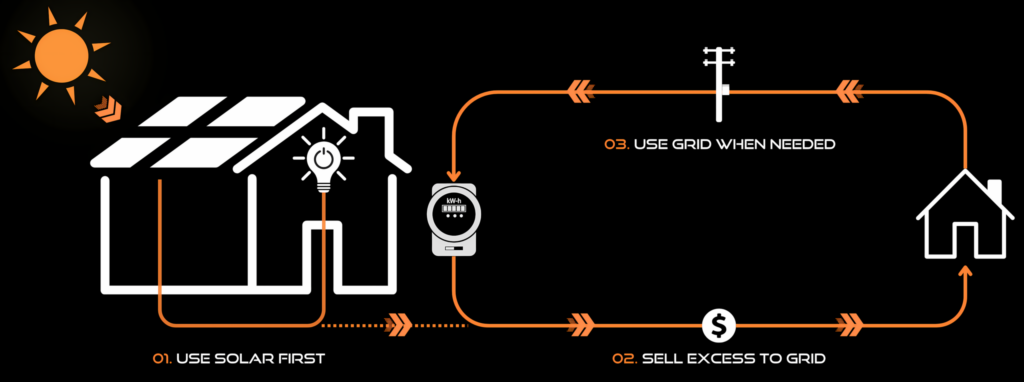
Most solar installs in Nova Scotia are grid-tied. That means your home or building stays connected to the grid, and your solar system reduces how much electricity you need to buy from Nova Scotia Power.
Here’s the simple flow:
During the day, your panels produce electricity.
Your building uses that power first (this is the highest-value savings).
If you produce more than you’re using at that moment, the extra flows to the grid and becomes credits under your program rules.
At night (or during cloudy periods), you draw power from the grid as usual, and credits help reduce what you pay over time.
Key concept: Solar isn’t “free electricity.” It’s an asset that offsets purchased electricity over decades.
Your bill savings usually come from two places:
👉 On-site self-consumption (power you use instantly)
👉 Export credits (power you send to the grid, then apply later based on the program mechanics)
👣 Nova Scotia Power pathways (what you actually qualify for)
There are different pathways depending on system size and customer type. This affects:
📄 How much paperwork is required
⌛ How long approvals can take
🪙 How credits apply on the bill
🧑💻 How you should size the system to avoid “paper ROI”
🔁 What your interconnection requirements look like
🏡 The Self-Generating Option (common for residential)
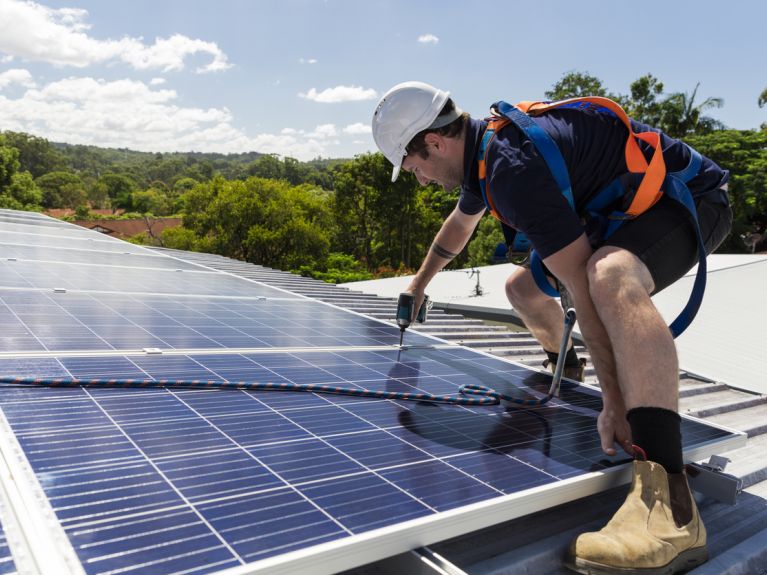
Nova Scotia Power’s Self-Generating Option is designed for customers who install a generator or battery storage device that shares the same meter, up to a specific size threshold. In practice, this covers the majority of residential solar systems.
Why it matters:
- it can be administratively simpler than larger pathways
- it’s often faster from design to install
it still requires proper electrical work, inspection, and utility coordination through your installer
🏢 Commercial Net Metering (larger systems and businesses)
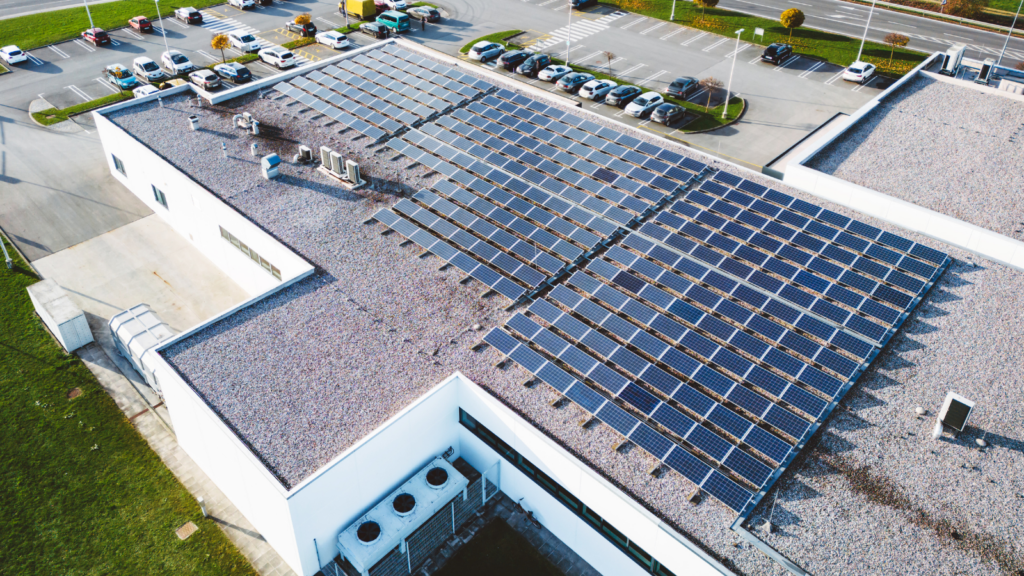
For larger commercial solar installation, Nova Scotia Power has a Commercial Net Metering Program designed to let eligible customers generate renewable electricity, offset part (or all) of their electricity needs, and bank surplus energy to apply against future bills.
Why it matters for ROI:
If you oversize or misunderstand crediting, a system can look amazing on paper but disappoint in real life. Strong design is about aligning the system with:
- real annual consumption
- how credits carry forward
- what happens at annual settlement
- your building’s load profile (especially daytime usage)
🤔 Is Nova Scotia actually good for solar?
Yes—and for three big reasons.
⚡ Electricity costs and long-term volatility
Solar gets more attractive in regions where electricity is expensive or rising. When you install solar, you convert part of a recurring expense (your power bill) into a long-term asset that produces energy for 25+ years.
🧊 Cold weather isn’t the real issue
Panels can perform efficiently in cold temperatures. Winter production is usually lower because:
- daylight hours are shorter
- snow can temporarily cover panels
A good design is sized for annual performance, not just winter output.
🌊 Halifax and coastal conditions are manageable with the right design
Halifax has wind, salt air, and freeze-thaw cycles. That doesn’t make solar risky—it just changes what “good workmanship” looks like. You want:
- proper racking and roof sealing
- corrosion-resistant hardware where appropriate
- clean cable management
- monitoring that lets you see performance year-round
💸 Costs and payback (what actually moves the numbers)

Solar pricing in Nova Scotia depends heavily on:
📐 Roof size and complexity (simple roof vs many dormers/angles)
🏡 Whether it’s roof-mount or ground-mount
🧑🔧 Electrical service upgrades (if needed)
🔋 Whether you want battery backup
📄 Permitting and utility coordination requirements
🔌Equipment choices (inverter type, monitoring features, etc.)
Rather than guessing “one price,” the clean way to evaluate solar is with a simple ROI model:
- What do you spend on electricity each year today?
- How much of that can solar offset based on your roof and usage?
- What financing or incentives reduce upfront cost or improve cash flow?
- What does “do nothing” cost over 20–30 years?
This is why we always ask for a power bill early. Without usage data, system sizing is guesswork—and savings forecasts get sloppy.
If you want a free estimate, send MAG Solar your most recent Nova Scotia Power bill and your address. We’ll return a production estimate, a recommended system size range, and a realistic savings outlook.
Why it matters for ROI:
If you oversize or misunderstand crediting, a system can look amazing on paper but disappoint in real life. Strong design is about aligning the system with:
📊 Real annual consumption
⏩ How credits carry forward
💵 What happens at annual settlement
⚡ Your building’s load profile (especially daytime usage)
🌞 Solar Incentives and financing in Nova Scotia
This is the part everyone cares about—and the reality is: savings often come from a stack, not a single rebate.
These are the Nova Scotia Solar Incentives you may be eligible for;
Halifax Solar City (Halifax Regional Municipality)
If you’re in HRM, Solar City can be one of the strongest financing tools available for solar.
In plain English: it can finance solar through a municipal mechanism, with fixed-rate repayment over time, and it’s designed to lower the upfront barrier so more Halifax property owners can go solar.
Why it’s a big deal:
- it can improve cash flow
- it can make solar feel “monthly-payment-friendly”
- it can reduce the friction of writing a big cheque upfront
Nova Scotia Power programs (how savings show up on the bill)
This is where most people get confused—so here’s the clean framing:
- Your building uses solar power first.
- Surplus energy becomes credits under program rules.
- Credits can carry forward month to month, but the annual cycle matters.
The annual cycle matters because Nova Scotia’s net metering credit period is tied to a yearly timeframe and anniversary settlement. That’s why sizing should be thoughtful: you want credits to be used, not stranded.
Commercial and institutional projects (federal incentives that can change the ROI)
If you’re a business, property owner, or institution, federal tools can improve after-tax ROI dramatically.
Two categories that often matter:
- Refundable federal tax credits for eligible clean technology investments with the Clean Technology Investment Tax Credit Program
- Accelerated depreciation rules that improve after-tax economics in early years
Important note: We’re not your accountant. But MAG Solar can provide the technical scope, cost breakdown, and commissioning documentation that finance teams typically need to model incentives correctly.
MAG Solar can quickly confirm which incentive pathway qualifies for your home or building and size the system around the rules that each incentive model require.
☀️ Halifax-specific guidance (Halifax solar installation / Solar City Halifax / Dartmouth + Bedford)

If you’re installing solar panels in Nova Scotia, or looking at solar in Halifax, here are the practical points that matter most.
🏠 Roof types and roof age
Asphalt shingles are extremely common across Halifax, Dartmouth, Bedford, Sackville, and nearby communities. Solar can be installed safely on asphalt shingles when roof penetrations and flashing are done correctly.
One of the biggest ROI mistakes:
Putting solar on a roof that’s near end-of-life. If the roof needs replacing soon, you usually re-roof first, then install solar—so you don’t pay twice later to remove and reinstall.
💨 Wind, storms, and snow
Nova Scotia gets major coastal weather. Proper racking is designed for local wind loads and installed to spec. Snow is real—but it’s rarely a deal-breaker. Panels often shed snow over time as temperatures change, and annual production is usually strong across spring/summer/fall.
🏙️Halifax Solar City coordination (do it early)
If you plan to use Solar City, the timeline matters. You don’t want to design the system, then scramble with financing steps last minute. The clean approach is to coordinate the project flow early so financing, contractor steps, and inspections line up. If you’re in HRM and want Solar City financing, book a free assessment with MAG Solar and we’ll tell you quickly whether your property is a fit and what the next steps look like.
📋 Halifax “prep list” before you request a quote (saves time)
If you want your Halifax solar quote to be fast and accurate, have these ready:
- Your most recent Nova Scotia Power bill (or last 12 months of usage)
- Your civic address (so we can review roof geometry and shading)
- A note on how you heat your home (electric baseboards, heat pump, oil, etc.)
- Planned upgrades that change usage (heat pump, EV charger, expansion)
Why this matters: Solar should match your future reality, not just last month’s bill.
👷 Step-by-step process to install solar in Nova Scotia (what to expect)
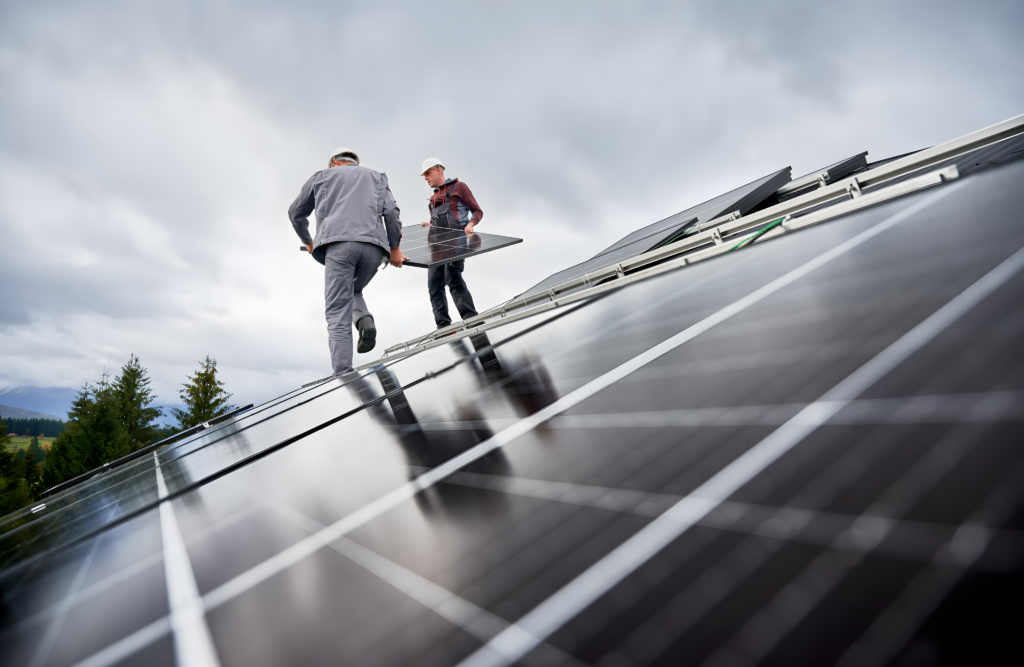
If you follow this sequence when installing solar panels in Nova Scotia, projects tend to run smoothly.
Step 1: Free assessment + bill review
For a free solar assessment, we review:
- annual electricity usage
- roof geometry, shading, and usable space
- electrical service and panel capacity
- whether you want pure savings or outage resilience too
Step 2: Preliminary design + realistic production estimate
A credible estimate includes:
- projected annual kWh production
- expected bill offset based on your consumption profile
- a roof layout that respects vents, dormers, setbacks, and shading
- equipment plan (panels + inverters + monitoring)
Step 3: Choose the financing/program pathway (early)
If you’re in Halifax, this is where Solar City planning happens.
If you’re outside Halifax, this is where you confirm low interesting financing options or your preferred structure.
Step 4: Engineering, permits, and interconnection planning
Depending on the project:
- site plan and electrical single-line diagram may be required
- equipment approvals and labeling requirements must be met
- inspections and utility steps are scheduled early to prevent dela
Step 5: Installation
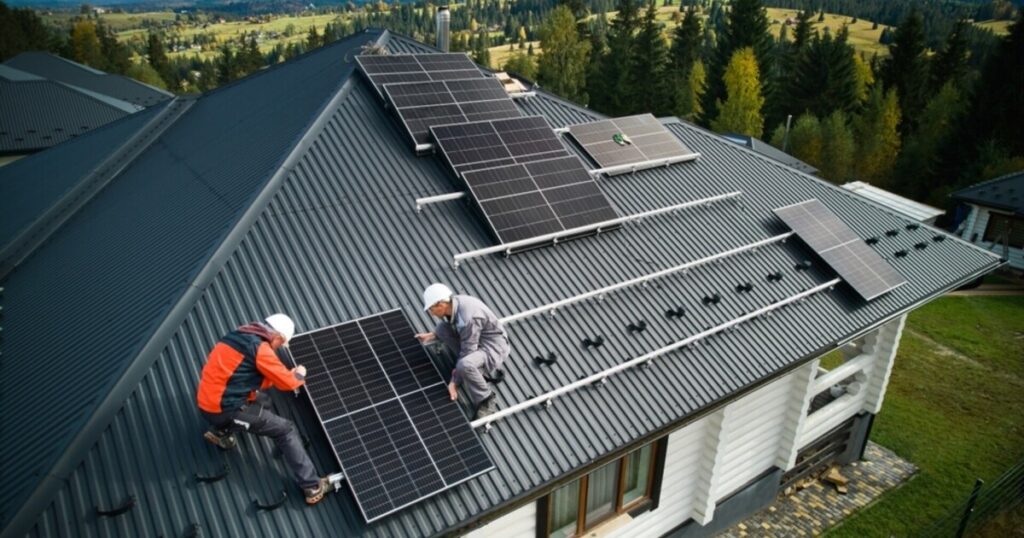
Many installs are physically fast once approvals and materials are ready.
The part that slows projects down is usually:
- permitting and inspections
- utility coordination
- scheduling bottlenecks
Step 6: Commissioning + monitoring
Commissioning is when your system is turned on and verified. You should receive:
- monitoring access and a quick walkthrough
- warranty documentation
- system manuals and basic maintenance expectations
Step 7: Operations and maintenance
Solar is low-maintenance, but not zero-maintenance.
Best practices:
- check monitoring monthly
- trim trees as shading changes over time
- consider occasional cleaning if coastal film/pollen buildup is significant
- plan long-term lifecycle expectations (inverters may have different service lives than panels)
🙅♂️ Common mistakes that hurt Nova Scotia solar ROI (avoid these)
When searching for a ‘solar company near me’ there a lot of solar companies in Halifax and Nova Scotia. These are the mistakes and red flags to look out for:
❌ Mistake 1: Designing without a bill
If you don’t size to annual kWh and rate structure, the model is guesswork.
❌ Mistake 2: Oversizing “just because”
When installing panels in Nova Scotia, sizing the solar system is crucial to match your actual usage. Oversizing can create credits that don’t translate to the value you expect, especially under annual settlement rules.
❌ Mistake 3: Ignoring roof age
There are a lot of good solar companies in Halifax although some ignore this crucial factor. If the roof needs replacing soon, removal and reinstall can crush ROI.
❌Mistake 4: Skipping monitoring
Some solar companies, skip the vital walk-through of monitoring the system. If the system is down for 60 days, you lose a big chunk of annual savings.
❌ Mistake 5: Leaving financing until the end
If you want Solar City or loan-based financing, timeline alignment matters. Choosing a solar company that is educated in the process, helps avoid headaches later.
When selecting a solar company in Halifax or Nova Scotia, make sure to look out for these common mistakes. At Mag Solar, we have an abundant amount of experience nationally, and locally in Nova Scotia. Our solar specialist’s and installation team have the experience and training to avoid these mistakes.
🌞 Get your Free Solar Quote Today
If you’re considering installing solar panels in Halifax or anywhere in Nova Scotia, the best next step is a fast assessment.
MAG Solar can provide a free solar no-obligation proposal that includes:
✅ a right-sized system recommendation
✅a production estimate based on your roof
✅ a net metering-focused savings plan
✅ equipment options and design notes
✅ clear next steps for permits and interconnection
Ready to see what solar looks like for your home or building?
- Harness the Power of the Sun
Get a Free Quote
Book a free solar assessment with MAG Solar and get a clear plan for your Halifax or Nova Scotia property.
☀️ Nova Scotia Solar FAQS
Yes! When installing solar panels in Nova Scotia, output is lower mainly because days are shorter and snow can cover panels, but they still generate with daylight.
Nova Scotia has utility pathways that credit surplus energy under program rules, and system size categories matter.
It’s a Halifax program designed to finance solar in a way that reduces the upfront barrier and supports adoption through a structured process.
It depends on your annual electricity use, roof layout, and how much solar production is credited under Nova Scotia Power rules. Many Halifax systems are designed to offset a meaningful portion of annual consumption, which can reduce month-to-month costs and improve long-term budget stability.
The physical install is often quick once everything is approved, but the total timeline depends on design, permitting, inspections, utility coordination, and scheduling. When installing solar panels in Nova Scotia, the longest part is approval from utility, solar panel installation usually takes 1-3 days. The smoothest projects start with a bill-based assessment and a clear plan for approvals.
If you’re in HRM, Solar City may be an option to finance solar as a property improvement. Eligibility and program details can change, so it’s worth confirming the current requirements and timeline early before finalizing your system design.
It can be, depending on your goals. Solar City is designed to reduce upfront cost barriers and can be attractive for property owners who prefer predictable payments. A traditional loan might be better if you want different term options or faster approval—MAG Solar can help you compare the best fit.
Not always, but if your roof is near end-of-life, replacing it first can prevent the cost and hassle of removing and reinstalling solar later. A good installer will evaluate roof age, condition, and layout before recommending a final design.
Yes. The same Halifax-area drivers apply: electricity savings potential, long system lifespan, and net metering crediting. The biggest differences are usually roof shading, roof layout, and how your household uses power across the day. Installing solar panels in Nova Scotia is different depending where you are, but have the same benefits.
Yes, solar installations typically require permits and inspections, and the process is handled differently depending on your property type and scope of work. MAG Solar helps manage the permitting and inspection steps so the system is installed safely and meets local requirements. Installing solar panels in Nova scotia, varies for residential and commercial solar installations. Commercial requires a bit of more in-depth permitting process.
Yes, installing solar panels in Nova Scotia typically requires permits and inspections, and the process is handled differently depending on your property type and scope of work. MAG Solar helps manage the permitting and inspection steps so the system is installed safely and meets local requirements.
Get a bill-based estimate. If you share your Nova Scotia Power bill and address, MAG Solar can estimate system size, annual production, and realistic bill offset—then you’ll know quickly whether it’s worth moving forward and which pathway makes the most
- FAST • FREE • NO OBLIGATION
Get Your Free Solar Quote
Fill out the form and we’ll design a custom system for your roof with projected savings, equipment options, and timeline.